Guide
Perge lies in the Aksu district of Antalya, 17 kilometres east of the city. Pottery from the acropolis carries the settlement back to the Early Bronze Age, and Hittite texts name the place as Parha.
Its excavation history is long. Arif Müfid Mansel began work in 1946; Jale İnan dug here through the 1970s and Haluk Abbasoğlu took over in the 1990s. Since 2012 the excavations, along with restoration and conservation, have been run by the directorate of the Antalya Museum.
The city had three main periods. Its first good years came in the Hellenistic age: it was laid out as a planned city in the third century BC, and the Hellenistic towers that still stand solid today belong to that design.
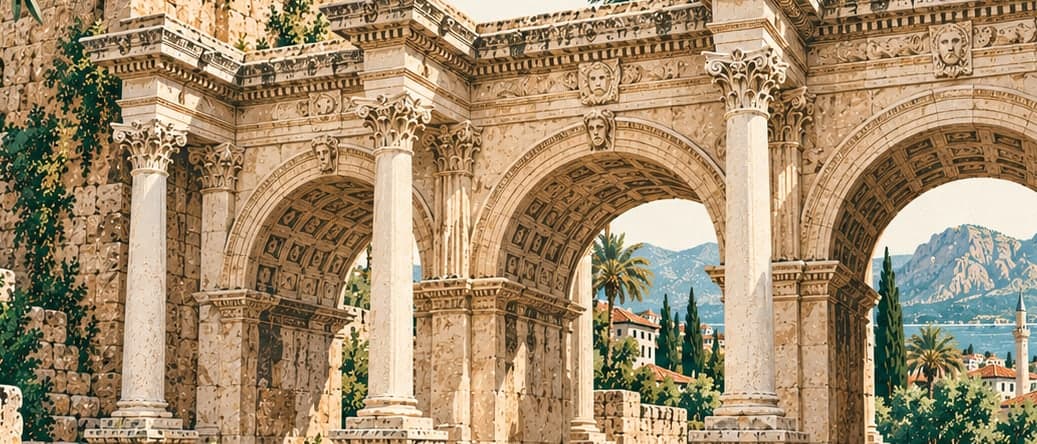
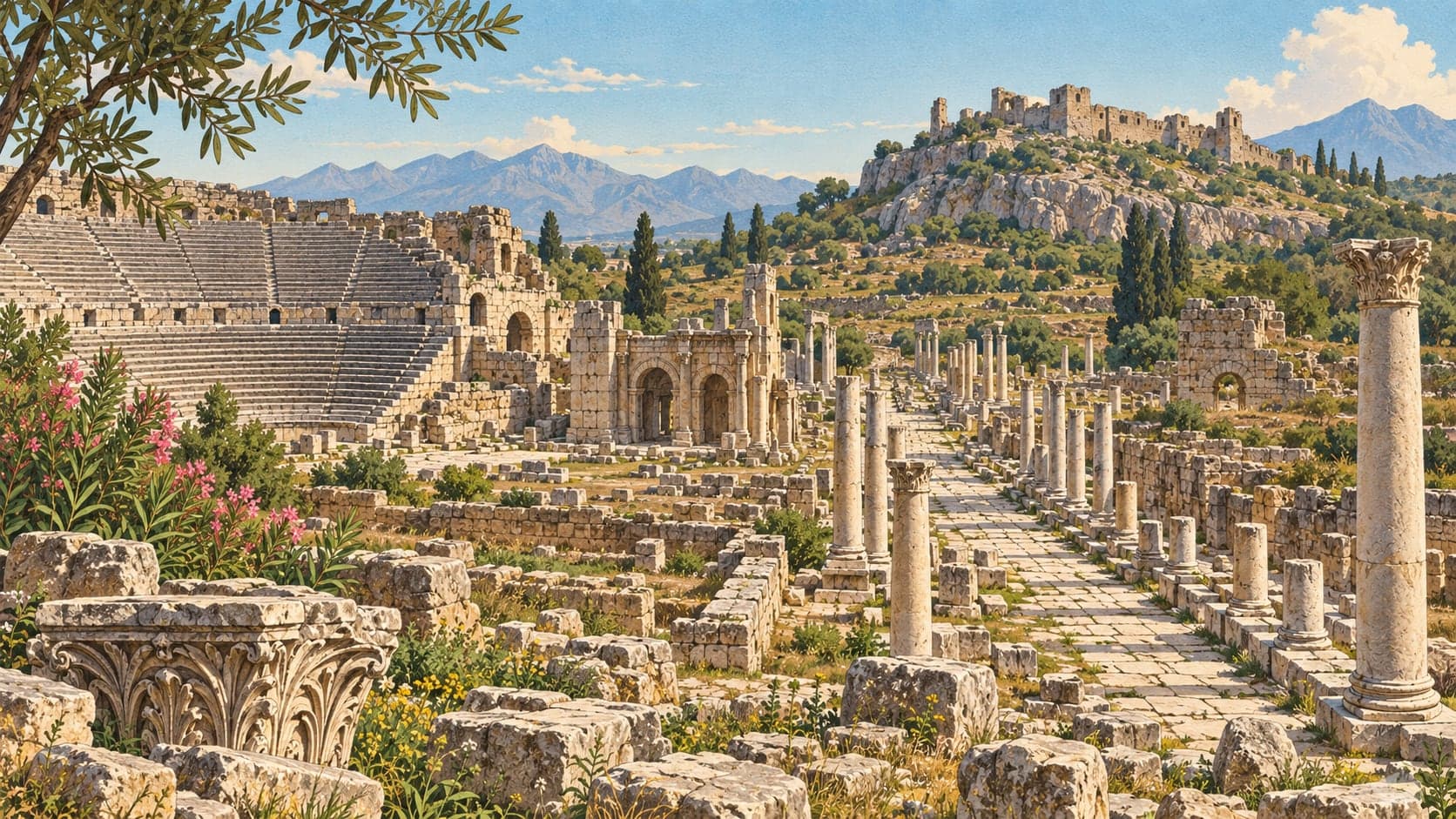
Its golden age came under Rome. Through the second and third centuries AD Perge took what the long peace offered and turned its position to account, and the rebuilding of that period produced the buildings visitors come for now — the theatre, the stadium, the city gate, the agora and macellum, the palaestra, and the baths, water channels and monumental fountains that made water part of the city's decoration.