Guide
Phellos stands on the slope of Felen Dağı north-east of Kaş, on a hill commanding the mountain country around it. With Antiphellos, which faces it, it is one of the few Lycian cities carrying a Greek name; the word means the stony country, and its Lycian equivalent is Vehinda.
In the fourth century BC this was an important city. It was the centre of settlement in the region until the Hellenistic period, when it lost that position to Antiphellos — the harbour city it had founded itself.
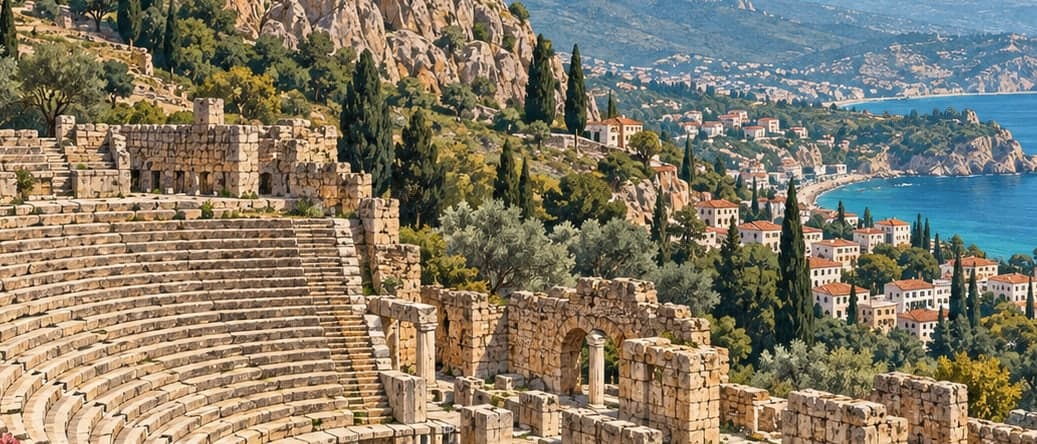
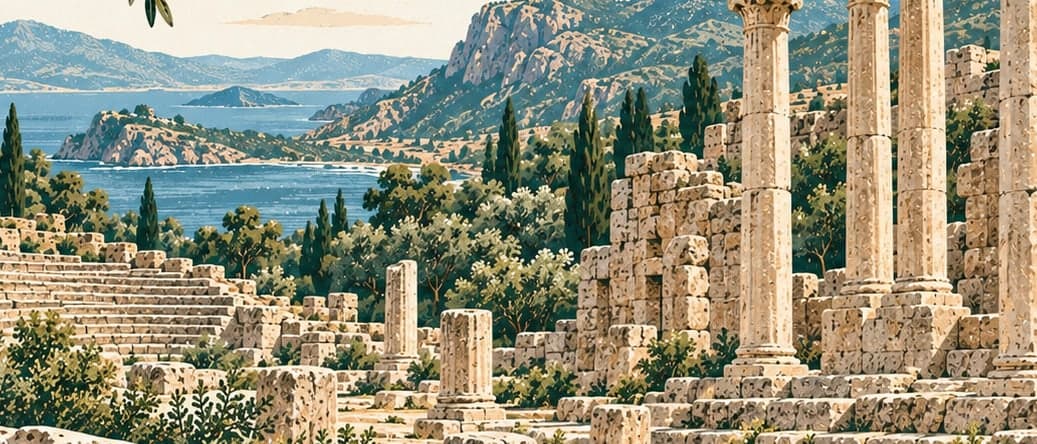
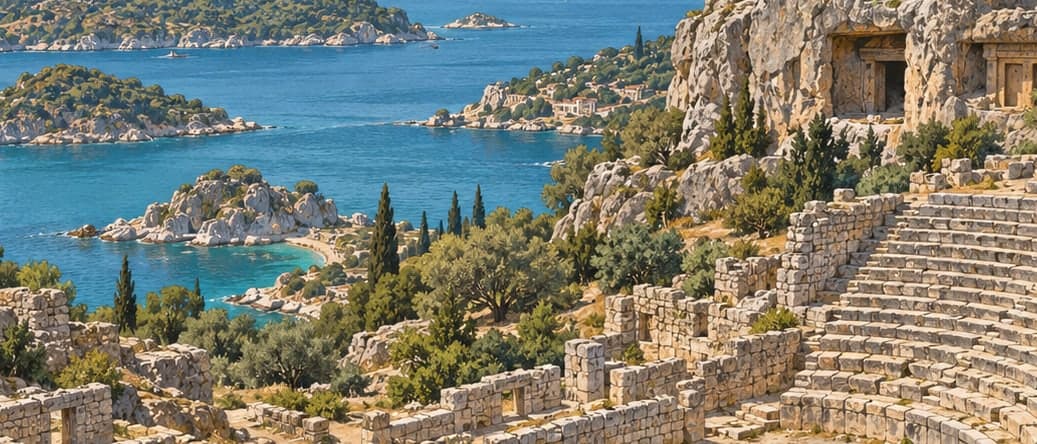
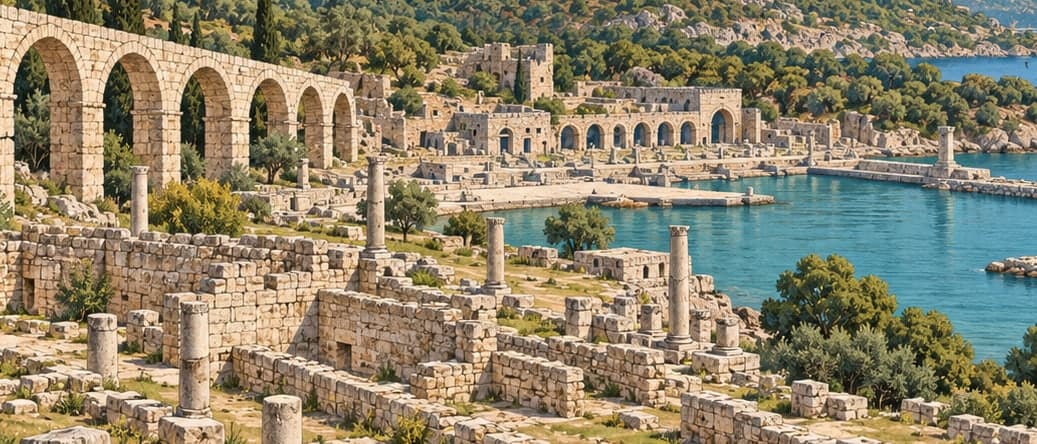
Little is known about its history, and what remains looks less like a large settlement than a defended position. Apart from the wall enclosing the acropolis, built in places in the polygonal technique, there is not much standing. The acropolis covers an area about 550 metres long and 200 wide, entirely ringed by walls built of the limestone blocks the region provides; the towers built against the wall on the east and south use rectangular masonry instead.
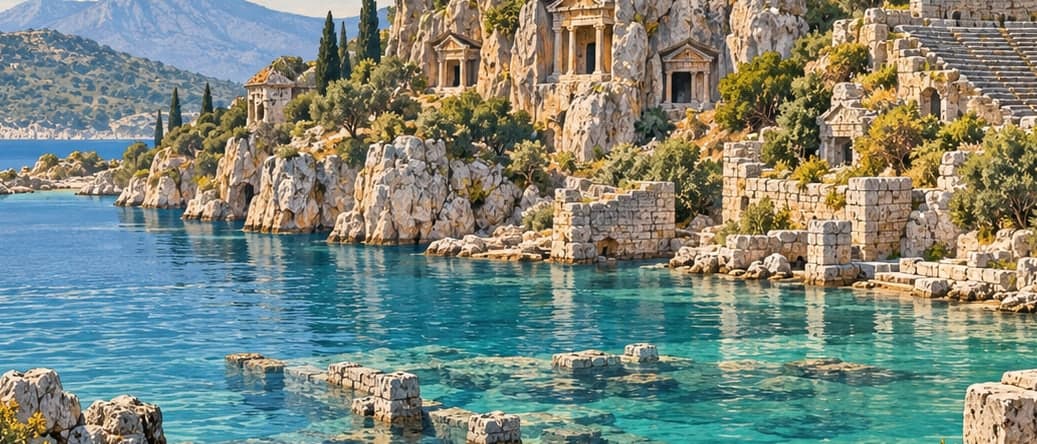
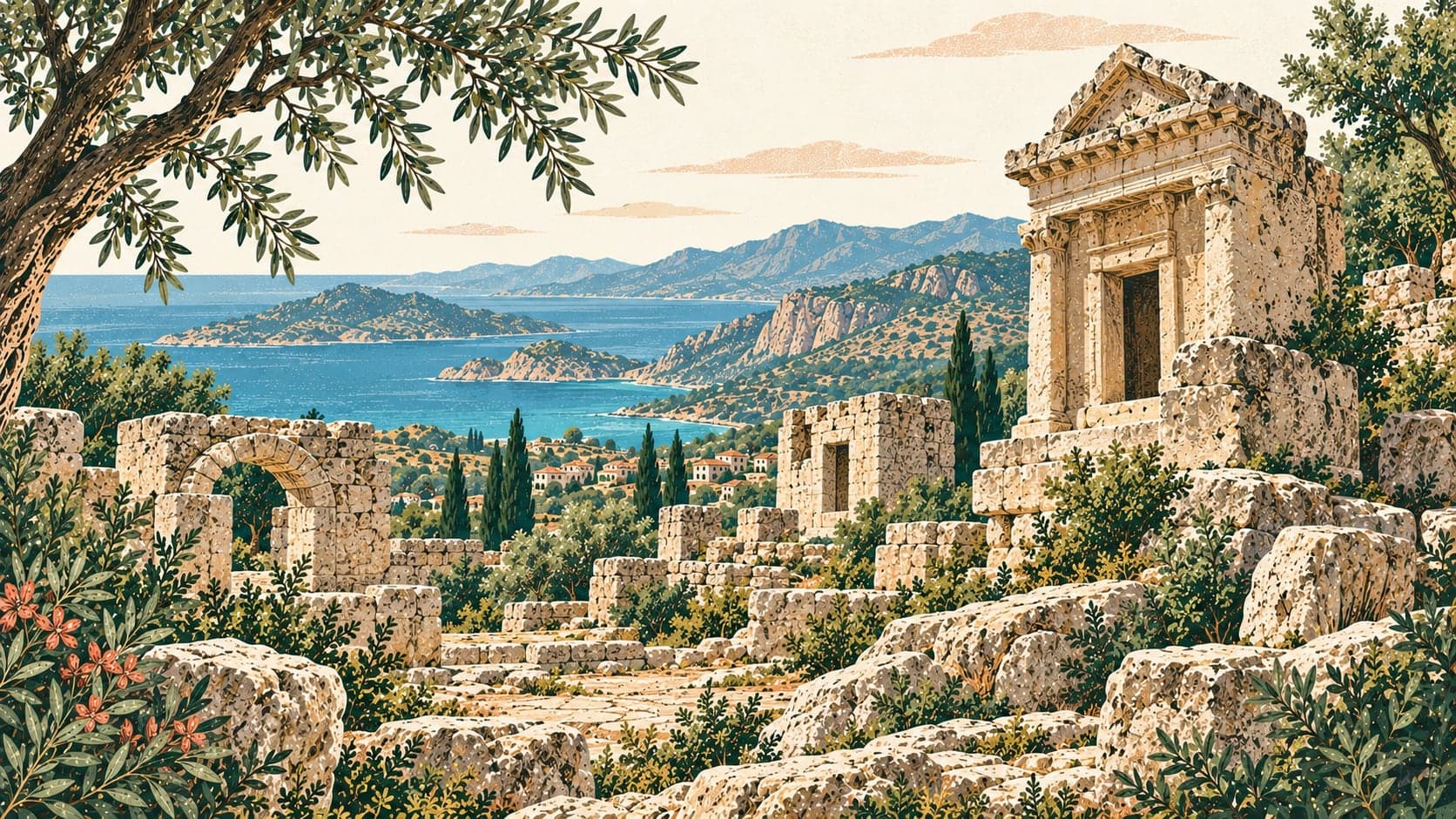
The house-type rock tomb on the west edge of the acropolis is one of the most distinctive examples of Lycian timber house architecture transferred to a rock-cut grave. In the valley north of the acropolis and on the skirt of the hill opposite lie a great many sarcophagi, and the carved one among them is the most striking thing at the site. It is limestone in three pieces, base, chest and lid. On one side the owner of the tomb is shown reclining on a couch with a cup in his hand, two standing figures on either side of him and birds beneath the couch; the other side is unclear. One short end carries a warrior, the other a warrior holding out a helmet to the tomb's owner. The sarcophagus dates to 385–350 BC, and on the pediment of its lid griffins face one another. Phellos is among the Ancient Cities of the Lycian Civilisation proposed to the UNESCO World Heritage list in 2009.