Guide
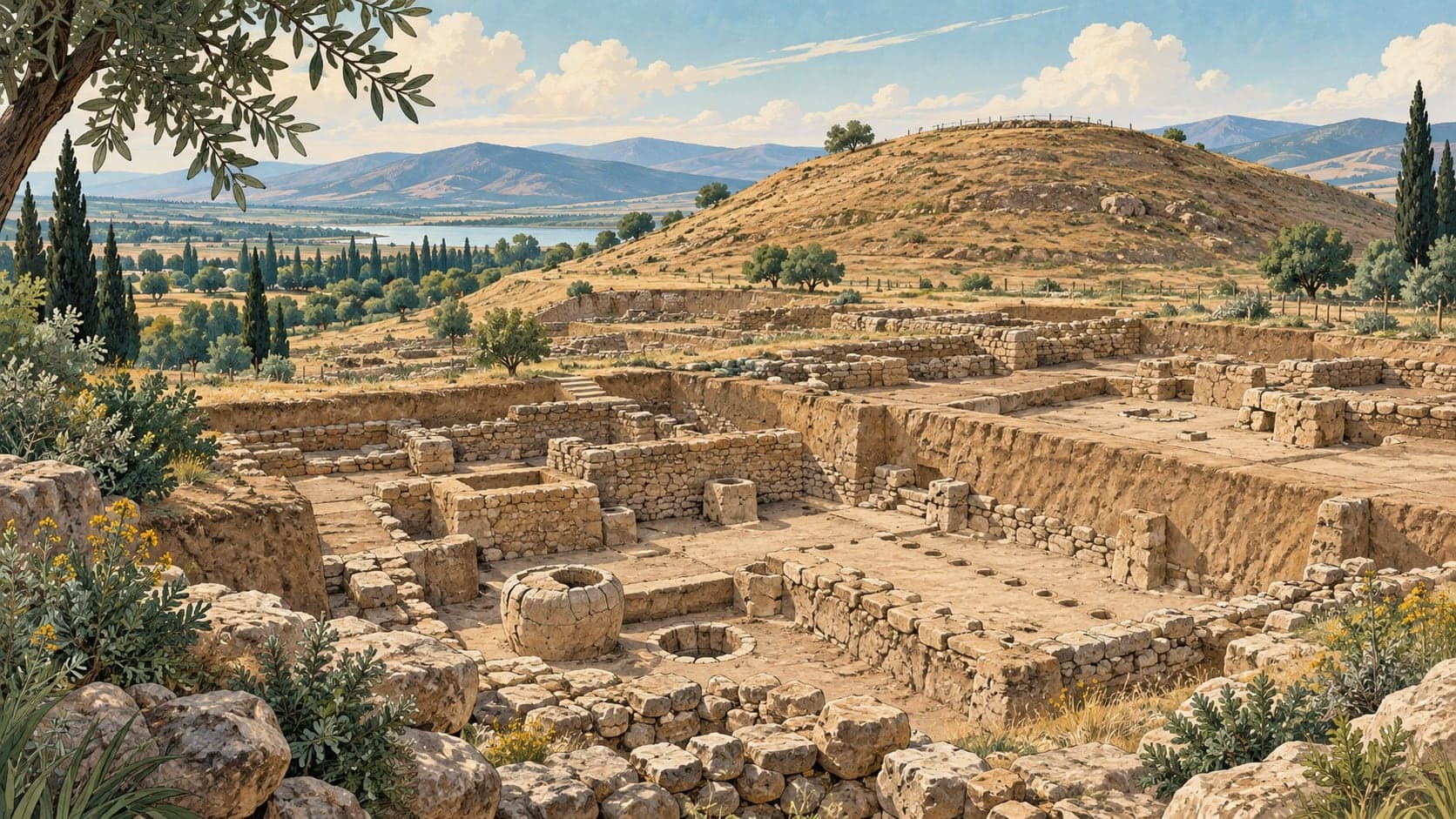
Seyitömer Höyük is a settlement mound some twenty-four to twenty-five kilometres north-west of the centre of Kütahya as the crow flies, lying north-west of the village of Seyitömer. It stands within the reserve land of the Seyitömer Lignite Works, a state coal enterprise. The mound measures 150 by 140 metres and rises twenty-four metres, with roughly two thousand square metres of flat ground on top.
Excavation, funded by the lignite works, began in 1989. N. Aydın of the Eskişehir Museum led the first season, A. Topbaş of the Afyon Museum the seasons from 1990 to 1992, and A. İlaslı of the same museum the 1993 season. After a break, digging began again in 2006 under the archaeology department of Dumlupınar University, with Professor A. Nejat Bilgen as director.
The lowest and oldest cultural level is described as the transition from the Late Chalcolithic to the Early Bronze Age, with the second phase of the Early Bronze Age above it. The upper levels hold settlements of the second millennium BC and of the Roman, Hellenistic, Classical, Archaic and Phrygian periods. The first settlement was of the Early Bronze Age and lay beside a stream; it was walled in the Hittite period, and in the Phrygian period a thick, high wall again enclosed the settlement. Occupation on the hill reaches back five thousand years and was dense in the Bronze Age and in the Achaemenid, Hellenistic and Roman periods. The Middle Bronze Age settlement of the first quarter of the second millennium BC, the age of the Assyrian trading colonies, appears to have been thrown down and burnt by an earthquake around 1800 BC.
The pottery found on the mound matters a good deal. The ware in use from the end of the second phase of the Early Bronze Age to the end of the third is said to explain how the pottery industry of inland western Anatolia developed, and this group, recovered from the burnt layers at Seyitömer, is known to spread from the Eskişehir plain as far as the area around Çanakkale.
Pots were shaped by hand in the Early Bronze Age and later made in stone and clay moulds. Seyitömer is the only settlement in Anatolia where moulds are known to have been used in making pottery in the third millennium BC, and the earliest use of moulds recorded in the archaeological literature is here.
The excavations have also turned up furnaces for smelting iron, workshops and iron ingots dating to the last phases of the Early Bronze Age, along with plentiful terracotta spindle whorls, the weights used on weaving looms.