Guide
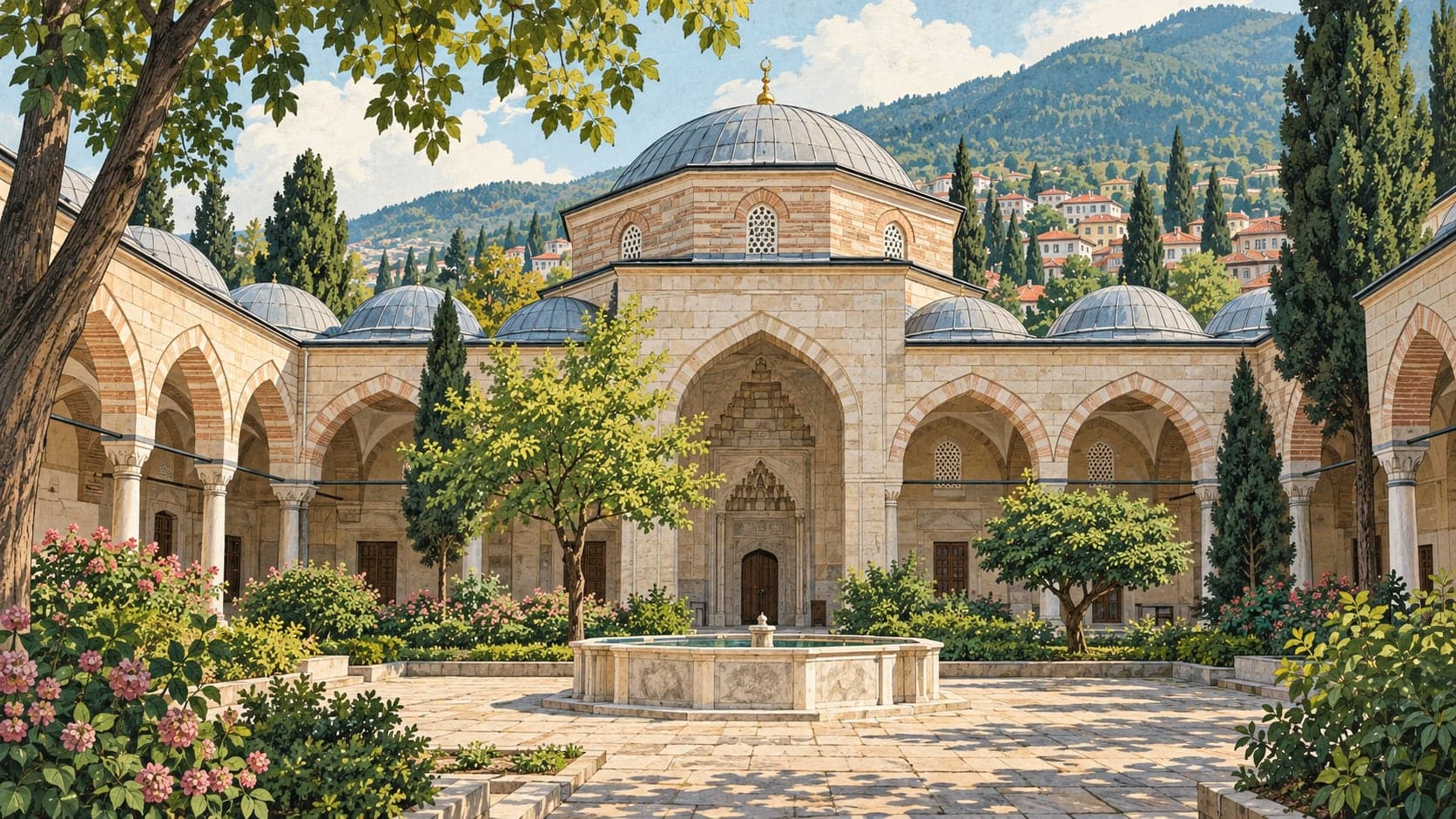
The Yıldırım Medrese in Bursa was built in 1399 by Bayezid I and was last repaired in 1948. It follows the standard scheme — cells behind arcades running round three sides of a rectangular courtyard, an entrance block, and a large domed classroom directly opposite it — but it is laid out on a notably longer plan than other medreses.
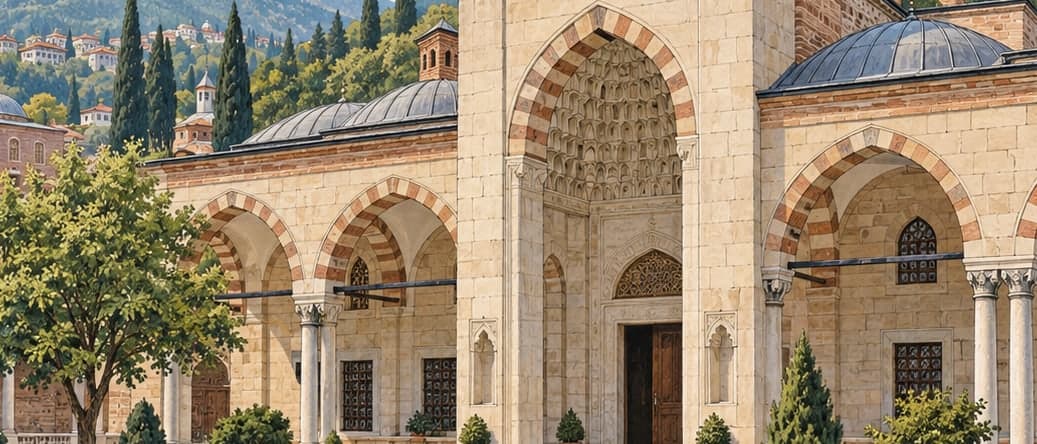
The entrance block is stone, rectangular, and domed, with two muqarnas niches on each side and colonnettes flanking the entrance arch. Through the low-arched door, 2.79 metres wide, you pass into another domed arcade bay and then the courtyard. The teachers' rooms, two of them, are rectangular and lie beside the entrance block. Eight cells are ranged along each of the side arcades, those on the north somewhat larger; all are covered with longitudinal vaults, each has one window and a door onto the arcade, and the corner rooms have two windows. Every cell has two niches and a fireplace. The classroom is a large iwan, entirely open at the front, 8.65 by 8.86 metres inside and covered by a dome whose corners are worked with thirteen rows of muqarnas cells, with a band of large almond motifs. The domes are lead-covered outside. The medrese is on Yıldırım Caddesi, served by buses running along Eğitim Caddesi and the Ankara road.