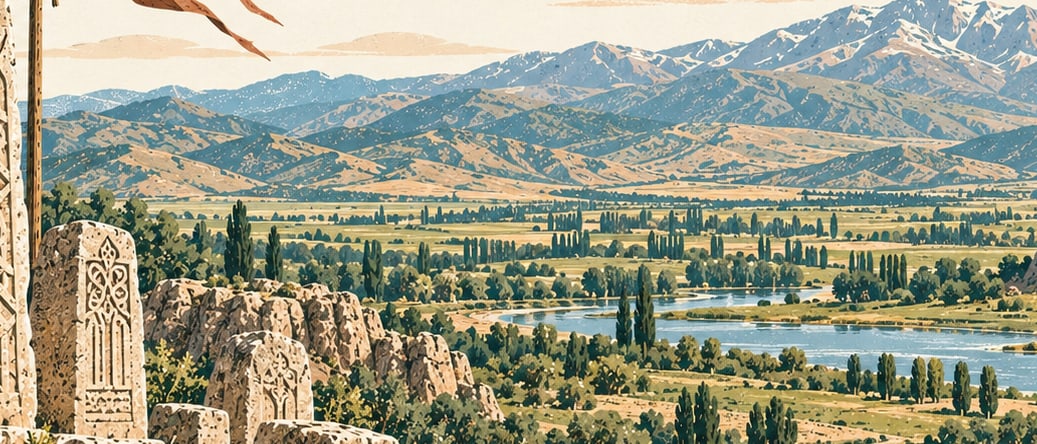
When Muş was first founded, and where its name comes from, are not known with any certainty, and there are a good many stories about it. On one account the name was given by one of the Hebrew tribes who fled the Assyrians and came to the Muş district; the Bitlis provincial yearbook of 1914 argued that it comes from the Hebrew word muşa, meaning well-watered, fertile and good for pasture. That the plain of Muş has been green and well watered from the past to the present suggests the story is not wholly without foundation.
A second account points to a people rather than a word. On this reading the name comes from the Mushki, who first appear in Assyrian sources after the Aegean migrations of the 12th century BC and who are reported to have settled in the upper Tigris valley. The Mushki ended Hatti rule in central Anatolia in the second half of the second millennium BC and expanded eastward, and a branch of them is said to have come to the Muş district and laid the foundations of the city before moving on into Assyrian territory.