Guide
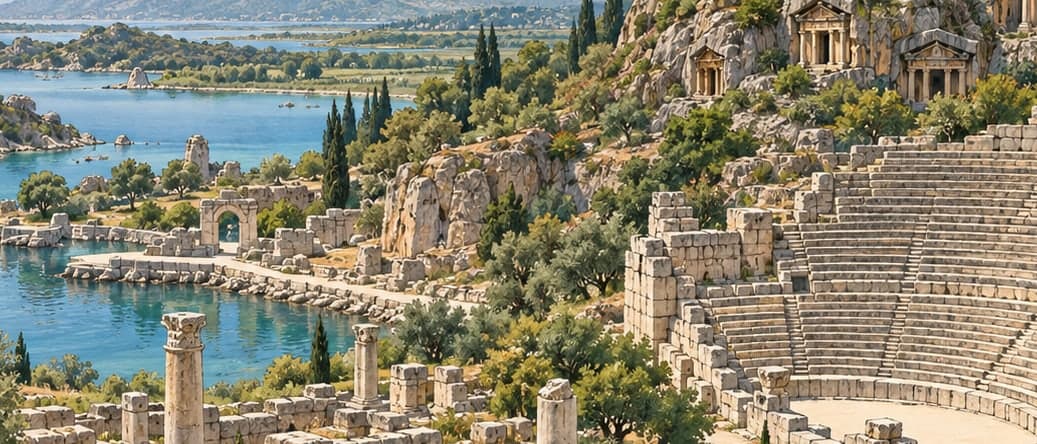
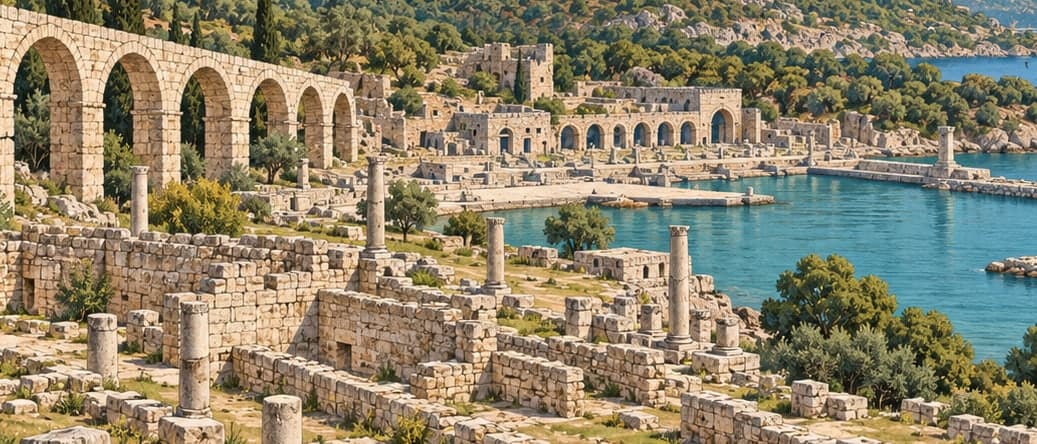
Limyra spreads over two levels at Saklısu in Finike district: an acropolis on the southern skirts of Toçak mountain, holding mostly the earlier buildings, and below it a walled area of the Roman and Byzantine periods, separated from the hill by the modern road.
The city's Lycian name was Zemuri, which the ministry takes as proof that it was settled from at least the fifth century BC. Its most active period was the first half of the fourth century, under the Lycian king Perikles, when Limyra was the capital of Lycia. Persian rule was nominal in those years, the ministry says, and Limyra stayed largely free like the other cities. It flourished again in the second and third centuries AD, was damaged by earthquakes from time to time and rebuilt each time, served as a bishopric under Byzantium, and was abandoned after the Arab raids of the eighth and ninth centuries.
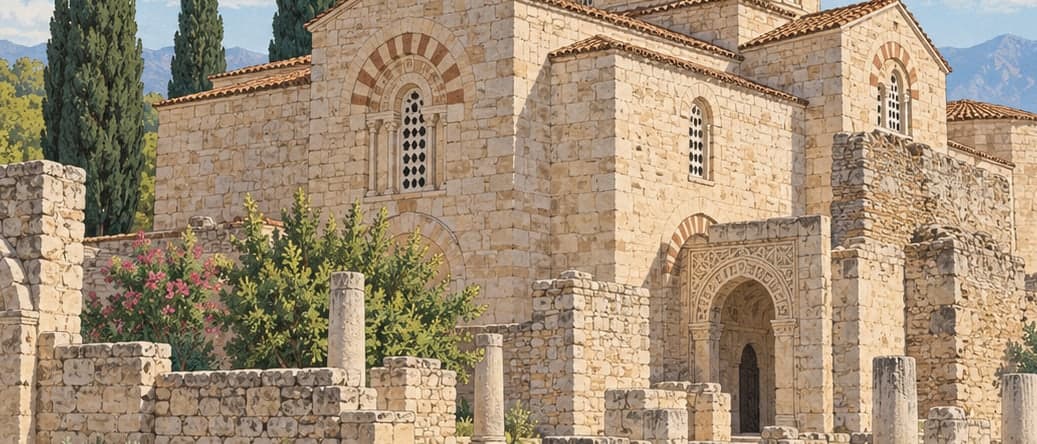
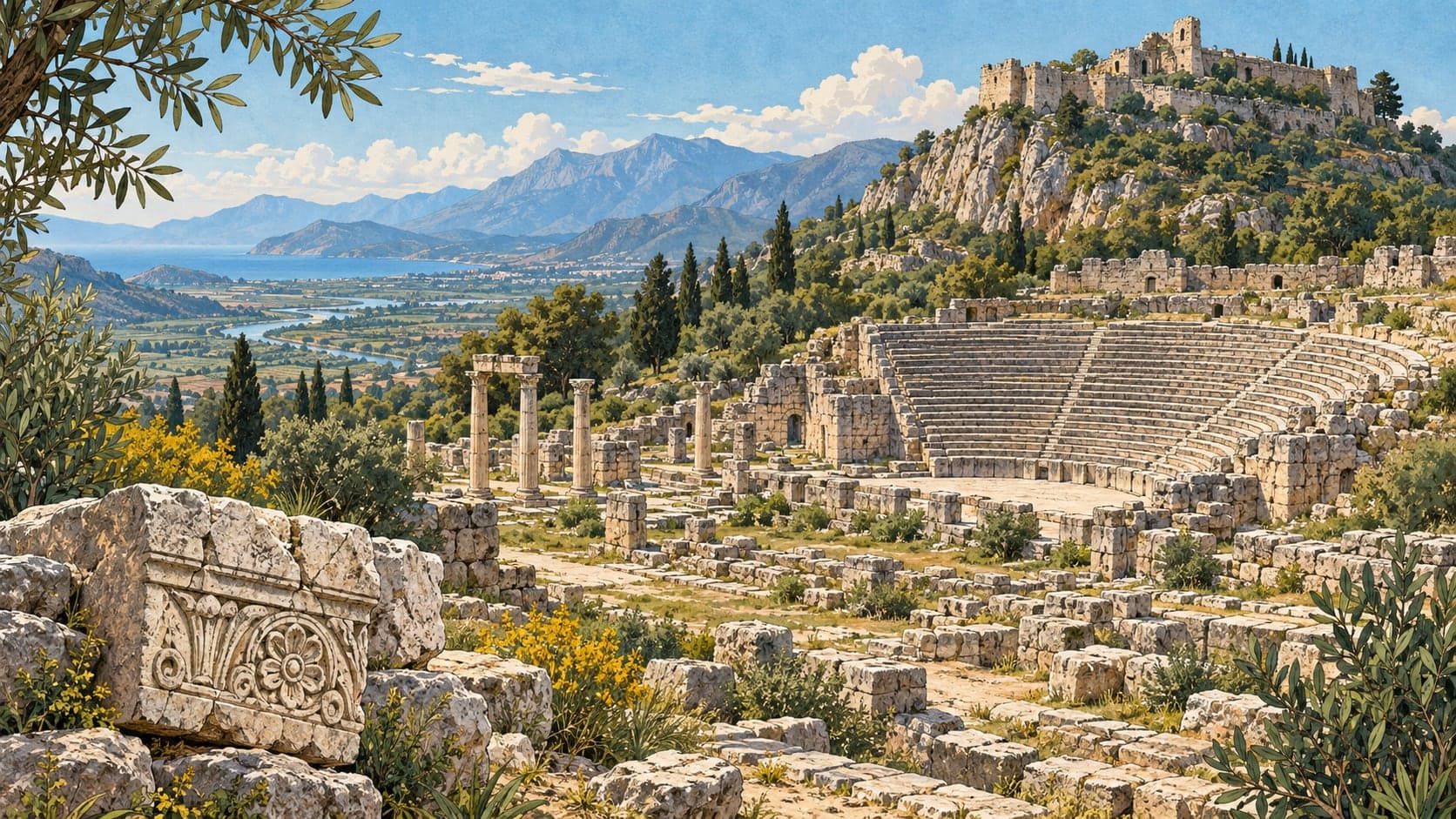
What the city is best known for is its rock tombs — more than four hundred of them, making it one of the richest in Lycia for this, and most of them known by name from inscriptions in the Lycian language. In the lower castle on the acropolis stand the walls, cisterns, a Byzantine church and the heroon of Perikles, a fourth-century BC monumental tomb whose architecture resembles the Nereid Monument at Xanthos; its important pieces are in the Antalya Museum.
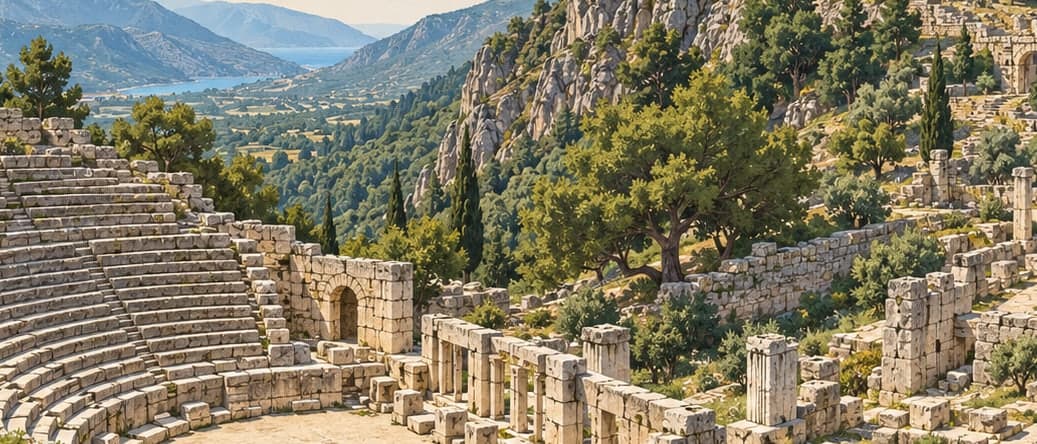
South of the road the site is split by the Limyros stream into an eastern and a western island. The western part, inside an early Byzantine wall, holds the older remains, and within that wall's southern side excavators uncovered a Hellenistic monument called the Ptolemaion, which with its sculpture in the Antalya Museum is among the most important recent finds here. The other monument in this area is the tomb of Gaius Caesar, adopted son of Augustus, built in AD 4 after he died at Limyra on his way back from Jerusalem to Rome. His ashes were taken to Rome; the monument was raised in his memory with no body in it, and it is known for its marble reliefs as much as for its architecture. The theatre, originally Hellenistic, stands where the acropolis meets the plain beside the Turunçova-Kumluca road, and was heavily repaired in AD 141.