Guide
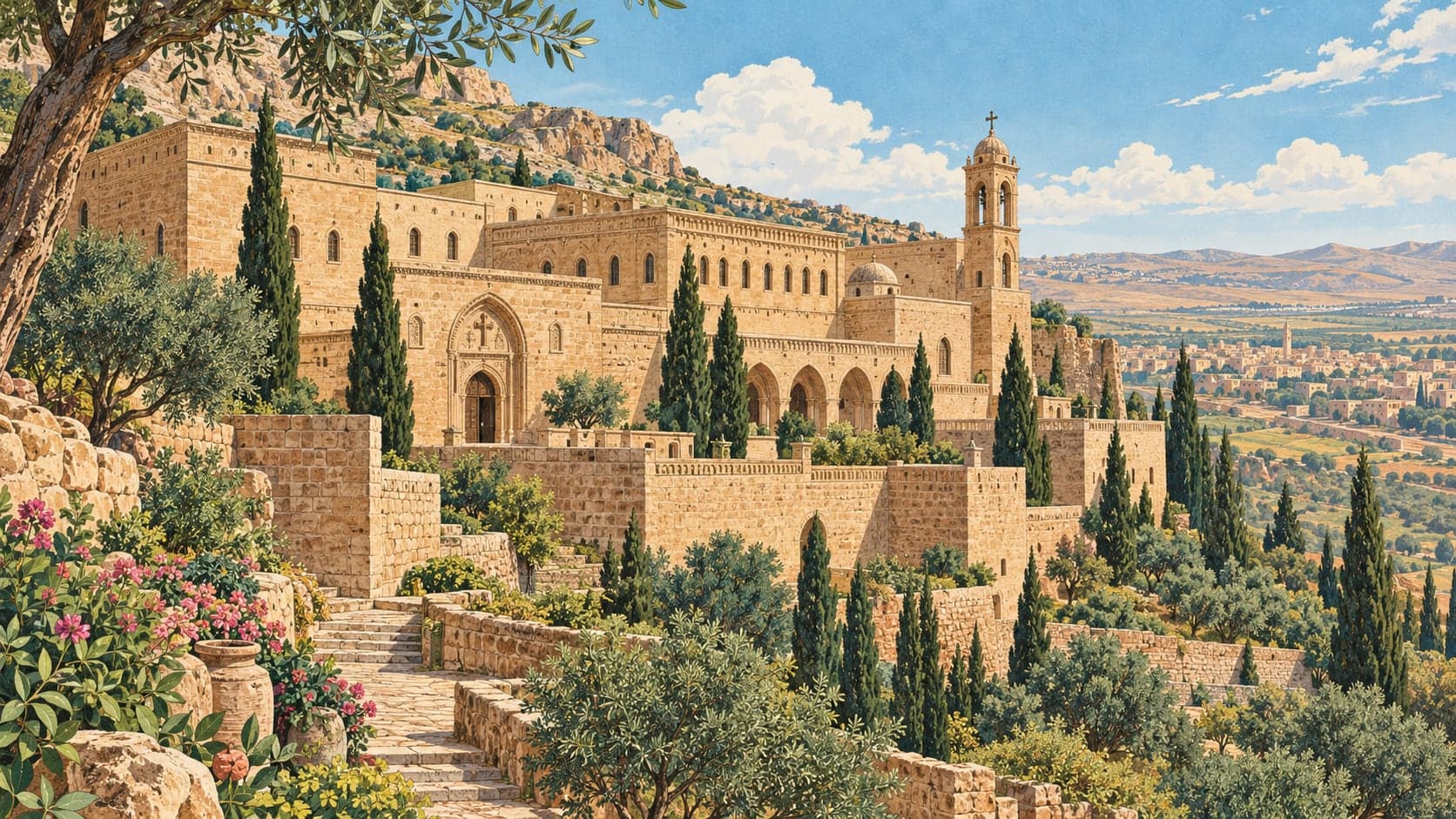
Deyrulzafaran stands four kilometres east of Mardin, on a point overlooking the plain. It is built over an earlier complex — a temple of the sun before our era, later used by the Romans as a fort. When the Romans withdrew, Saint Shleymun had the bones of certain saints brought here and turned the fort into a monastery, and it was known at first by his name.
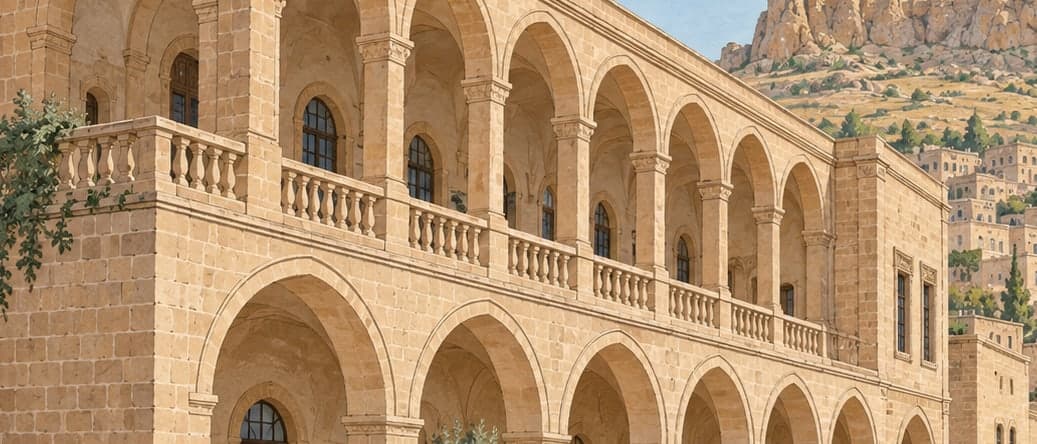
It has changed names twice more. After Saint Hananyo, metropolitan of Mardin and Kefertüth, carried out a major rebuilding from 793, it became the monastery of Mor Hananyo. From the fifteenth century the saffron growing around it gave it the name it carries now: Deyrulzafaran, the saffron monastery. The building rises through three storeys and reached its present form in the eighteenth century through additions made at many different dates.
Through its long history it was one of the centres of religious education of the Syriac church, and it brought the first printing press to the region. Patriarch Peter IV, who died in 1895, bought a press during a visit to England in 1874 and had it brought to the monastery in 1876. It printed books in Syriac, Arabic, Ottoman Turkish and Turkish until 1969, and a monthly magazine called Öz Hikmet until 1953. Some of what is left of the press is kept at the monastery and some at the Church of the Forty Martyrs in Mardin.
It is still in use. The monastery is the residence of the metropolitan of Mardin and remains one of the important religious centres of the Syriac church, visited both by Syriacs from around the world and by travellers.