Guide
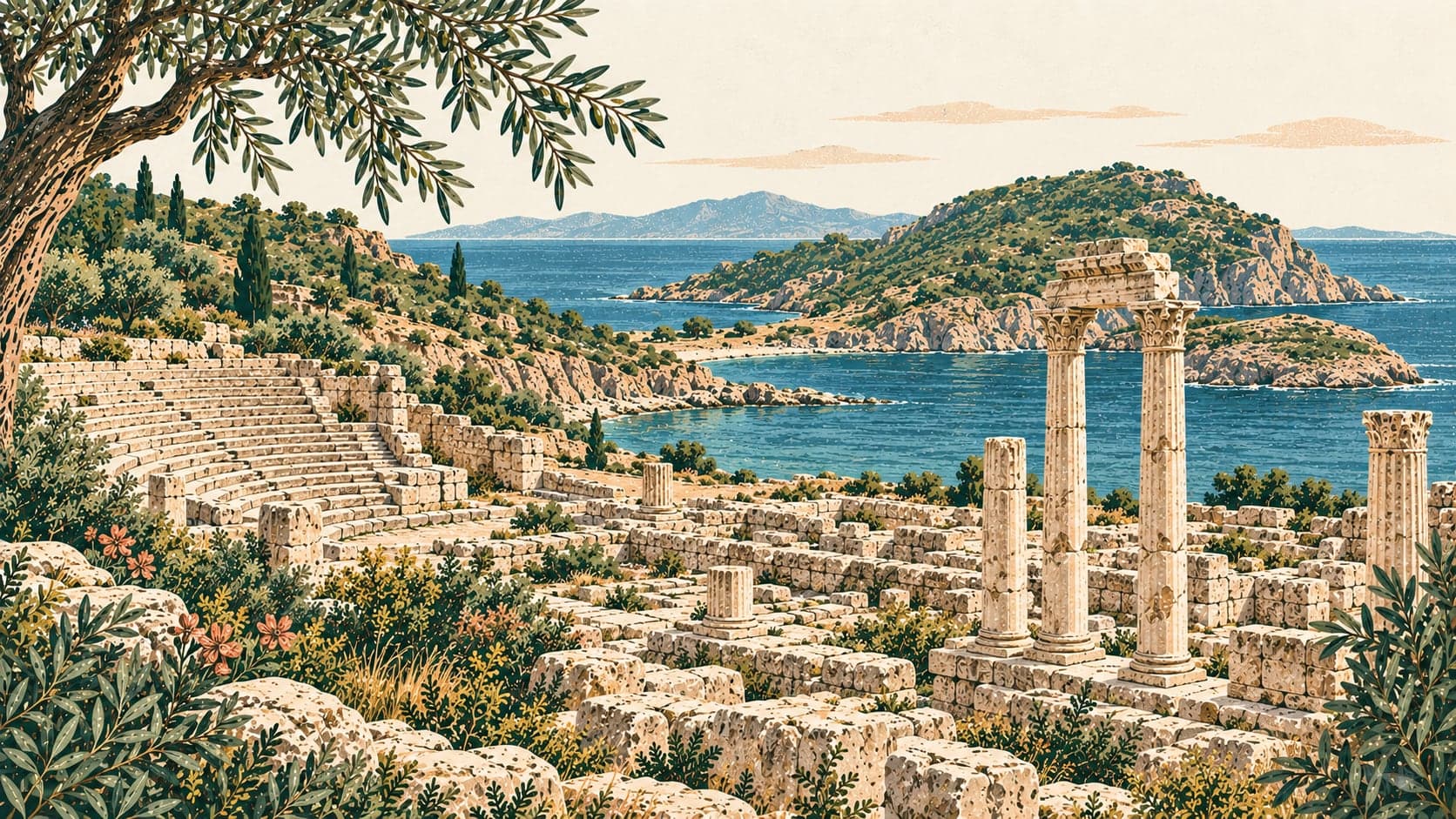
Knidos was built between Kos and Rhodes and was one of the most important centres of Caria — the second known Doric city after Halicarnassus, founded by Dorians from the Peloponnese shortly after their settlements on those islands. Strabo wrote that the city rose from the shore towards the acropolis like a theatre, and the mountainous ground does make it a city of terraces.
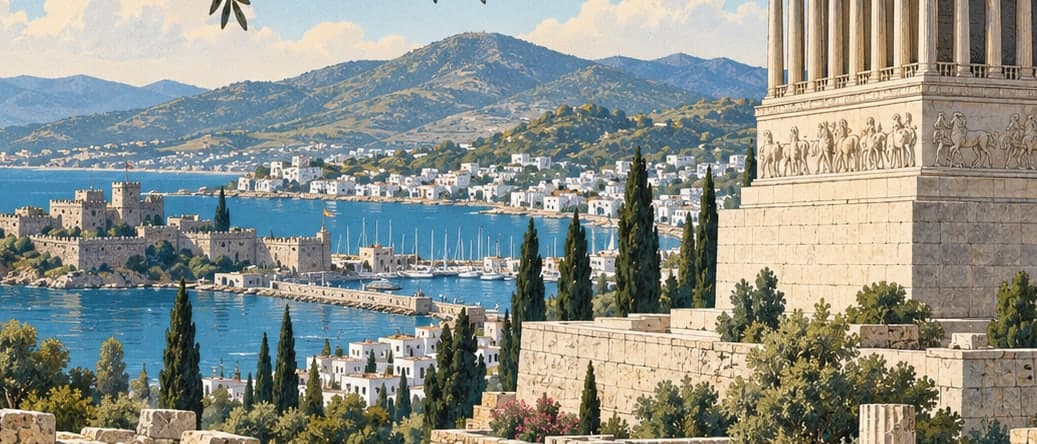
A narrow neck of land joins it to the islet called Deveboynu or Cape Krio, and a harbour was built in each of the two bays this created: the western one for warships, the eastern for merchantmen. Trade was highly developed, and Knidos exported the wine it was known for. From the sixth century BC it played a significant part in the Greek world.
One thing to expect on the ground: the great theatre, east of the city beside the sanctuary of Demeter, is largely gone. Its stones were taken down and carried away for the building of Dolmabahçe Palace and, in Cairo, of Mehmet Ali Paşa's palace and mosque; only wall remains are left.
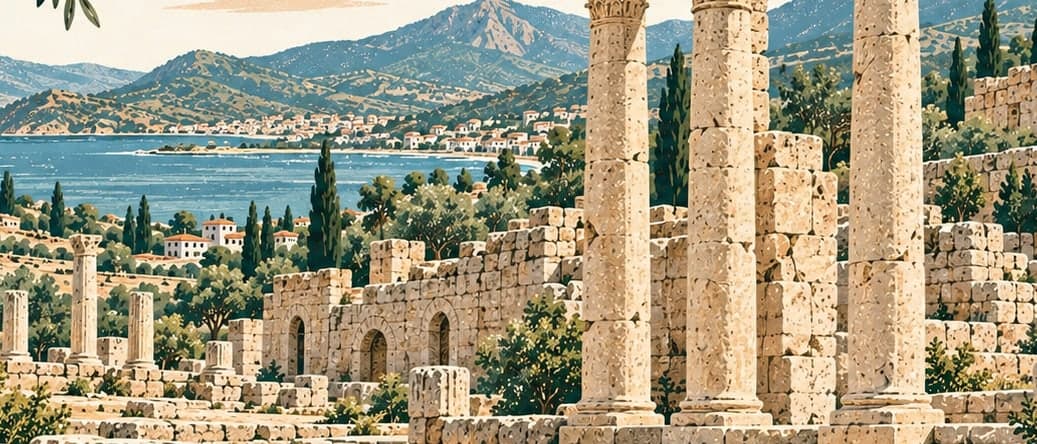
The city was laid out on a grid, parallel streets crossed by parallel avenues, with the acropolis and the circuit walls on the mainland part. Seven churches are known across the site, some with mosaic floors; on one floor slab near the east-west street are scratched inscriptions in Arabic. East of the city stands a very well preserved Hellenistic villa with frescoes. Northeast on the mainland are the fallen architectural pieces of a Corinthian temple, and west of that the Round Temple Terrace, named from the foundations of a circular building. Being the highest terrace, it is the point that sees and is seen from every part of the city — which, with the statements of ancient writers, led I. C. Love to connect it with the famous Aphrodite.