Guide
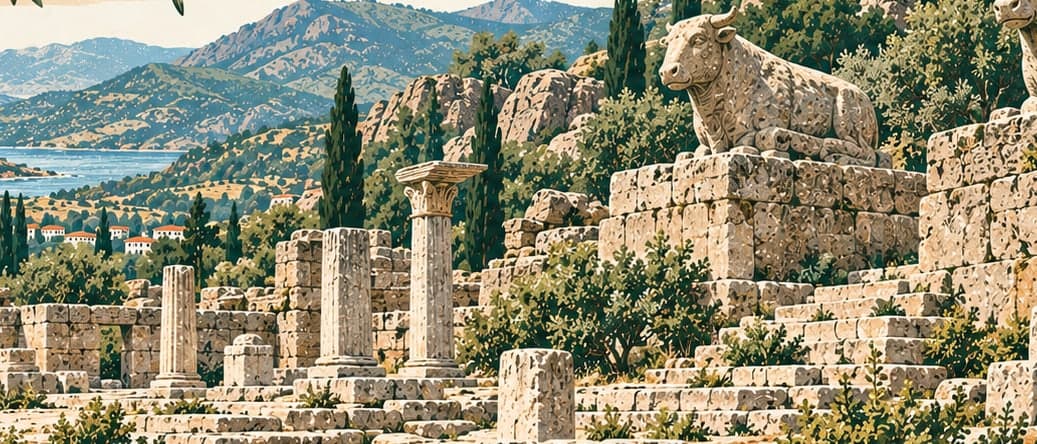
Lagina was a major Carian cult centre, and its fame has lasted: the area is still known by the name Leyne. Remains found here and around show settlement reaching back to the third millennium BC, and recent research indicates the area was inhabited without a break from the Early Bronze Age to the present. After Early Bronze Age graves at the Yarbaşı locality, the earliest finds belong to the Submycenaean period; from the eighth century BC small settlements began to grow and multiply, and in time the sanctuaries were built up with monumental architecture.
The Seleucid kings made Lagina the religious centre of the region through major building work, and made Stratonikeia — twelve kilometres away, and a separate record in our inventory — its political centre. Inscriptions surviving at Lagina and on the walls of the Stratonikeia bouleuterion record that the two were joined by a sacred way.
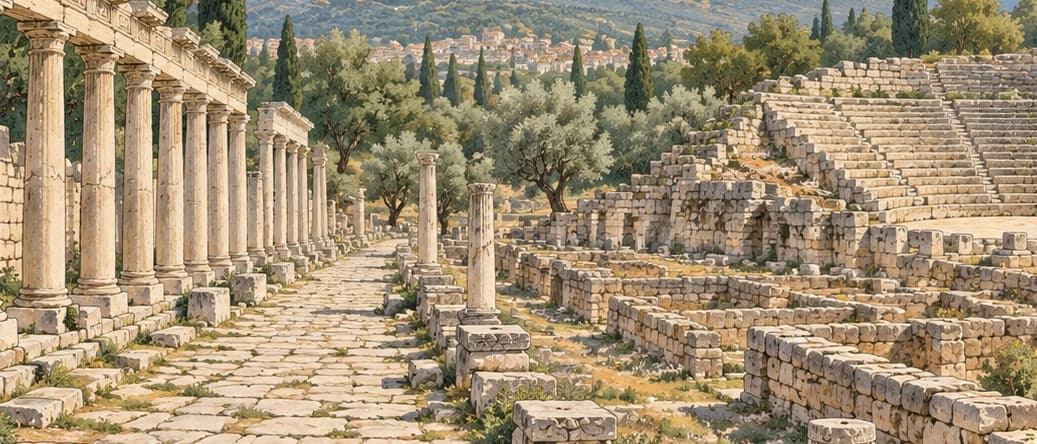
The sanctuary holds a propylon, the sacred way, the altar, the peribolos wall enclosing the precinct, Doric stoas and the temple of Hekate. The enclosing walls, which also form the back wall of the stoas, still stand to two metres. The monumental entrance has three doorways and, at its western end, an apse carried on four Ionic columns, and it connects to the stoa by a door. Ten flights of steps link that entrance to the paved road running to the altar.
One episode is recorded closely. In 40 BC the Roman general Labienus, who had joined the Parthians, attacked Stratonikeia in his campaign against Rome and failed to take it; he then plundered the sanctuary of Hekate at Lagina. In 27 BC Augustus made a large donation for the repair of what had been wrecked, and the inscription recording that gift is still on the lintel of the precinct propylon.